I’m pleased to announce that my article entitled “Writing through Growth, Growth through Writing: The Perks of Being a Wallflower and the Narrative of Development” can now be found in The ALAN Review‘s digital archives. Here is a brief abstract of the article, which won the Nilsen-Donelson award for best article published during the volume year:
This paper calls attention to the issue of social and personal development in Stephen Chbosky’s The Perks of Being a Wallflower, focusing on how the novel appropriates and transmutes the conventions of the formation novel, formally known as the Bildungsroman. Although the novel is written in an epistolary fashion, focusing on a series of letters sent to an undisclosed recipient, I argue that there is much value in approaching the text as a formation novel for it highlights the evolving nature of the Bildungsroman genre. The overarching themes of Charlie’s musings are focused on creating a social space in which the protagonist can record, evaluate, and deliberate his own position within his social context. These epistles also provide clarification of the pains and tribulations of achieving reconciliation between personal desire and social demand. Through a close-reading of the novel, I point out the role of writing in Charlie’s personal development, and how it influences and shapes his perspective of the world.
Front cover of Patrick Ness’ More Than This (2013)
“People see stories everywhere,” Regine says. “That’s what my father used to say. We take random events and we put them together in a pattern so we can comfort ourselves with a story, no matter how much it obviously isn’t true.” She glances back at Seth. “We have to lie to ourselves to live. Otherwise, we’d go crazy.” (Ness 217)
The notions of storytelling and narrative are central to Patrick Ness’ 2013 young adult novel entitled More Than This. As can be seen in the quote above, Regine, an important character in the novel, demonstrates awareness of the cognitive function of narrative: it is a method of organizing the world to make sense of it and to interpret it. In other words, it is an ordering or sequencing of events that conveys a particular set of ideas, beliefs, or functions. Through the implementation of metafictional elements and characters who are aware of the nature of storytelling and narration, Ness’ novel brilliantly subverts many of the grand narratives present in young adult literature, and fiction in general.
More Than This is a young adult novel that is difficult to describe. On one hand, it is a philosophical exploration of narrative, the afterlife, the nature of storytelling, and reality. On the other hand, it is a young adult dystopian novel that explores topics such as death, sexuality, family, and friendship. More than a novel, Ness’ work is an exhilarating narrative experiment: through the exploration of adolescence in a post-apocalyptic context, Ness pushes us to question the value of stories in our lives, regardless of whether said stories are real or fabricated.
In the novel’s introduction, Ness challenges the expectations that we have of narratives by beginning the story in an unexpected fashion. Although death is traditionally viewed as the endpoint of a narrative, it marks the beginning of the story being told in More Than This. The novel opens with Seth, the protagonist, committing suicide by drowning himself at sea. He immerses himself into violent and cold waters found in the Pacific Northwest area of the United States, and he is thrashed against some unforgiving rocks by the relentless waves:
The impact is just behind his left ear. It fractures his skull, splintering it into his brain, the force of it also crushing his third and fourth vertebrae, severing both his cerebral artery and his spinal cord, an injury from which there is no return, no recovery. No chance.
He dies. (Ness 3)
The introduction of the novel is thus a reversal of the usual teleology that we have come to expect in traditional narratives (particularly young adult narratives) which focus on the linear development or the transition of a protagonist from point A to point Z. Like most young adult novels, More Than This does focus on transition–but said transition is triggered through death rather than adolescence.
After killing himself, Seth awakens in a perverse version of his childhood home in England. Although Seth recognizes this home, he notices dramatic differences between the place that he knew and its current condition: thick ashen dust has covered nearly every surface, and everything seems abandoned and mistreated–as if nobody has lived in the house for decades. Seth soon realizes that he is alone in this strange place, and he comes to the conclusion that he is living in “A hell built exactly for him” (20).
What is fascinating about More Than This is its ambiguity. At first we are led to believe Seth’s interpretation of his surroundings as a personal hell, but as the novel develops, we receive conflicting events and pieces of information that make it difficult to fully understand and know the setting of the novel. Various theories develop as the narrative progresses. Although Seth believes that he is in hell, paying consequences for actions he committed in life, the narrative takes a dystopic, post-apocalyptic turn. It is revealed that Seth is now living in the “real” world, and that the world that he used to live in was merely a virtual (online) space that society created to escape the pressures of living in a decaying and fractured world (this is actually a very complicated part of the story that’s difficult to summarize, so bear with me).
The novel, however, complicates the reader’s ability to fully believe this dystopian narrative. Seth understands that the presence of a digital alternate reality does explain many things about the “real” world, but he also admits that this explanation is full of gaps. Further complicating Seth’s ability to trust in the “real” post-apocalyptic world are the inexplicable coincidences that he encounters regularly: loose ends tie a little too nicely, Seth is always rescued from danger at the last possible moment, and things sometimes materialize when he thinks about them. His distrust in his current reality begins to peak when he encounters two other people, Regine and Tomasz, who rescue him right before he is attacked by an ominous, Death-like presence known as the Driver, who travels around in a black van: “Something’s still not right about this. These two just happened to be there when he was running toward the hill, just happened to stop him before he made contact with the black van, just happened to find the perfect place to hide from the Driver?” (183, emphasis in original).
Because of the factors mentioned above, Seth begins to believe that what he is experiencing is simply a “story that he’s telling himself” (250)–and this is where the novel becomes increasingly interesting from a (meta)fictional perspective. The novel’s metafictional aspects are highlighted earlier in the novel, when Seth encounters a book that he read as a child. While re-reading this novel, he reflects on the nature of books, and how these objects are able to contain a reality within their pages: “A book, he thinks at one point, rubbing his eyes, tired from so much focused reading. It’s a world all on its own, too. He looks at the cover again. […] A world made of words, Seth thinks, where you live for a while“(135, emphasis in original). Although Ness uses italics to mark thoughts that are substantiated in Seth’s mind, one cannot help but notice how these italics inevitably highlight key phrases and ideas. These italicized words bring many thoughts to mind:
Seth is a protagonist who literally lives in a world made of words.
Through reading More Than This, we as readers end up living in a world made of words for a while.
It is possible that Seth’s current reality is nothing more than a world made of words.
The possibility of Seth’s reality being a story that he is telling himself becomes even more of a possibility towards the end of the novel, where he makes predictions based on past narratives that he’s encountered before. The most jarring of these predictions occurs after Seth, Regine, and Tomasz first destroy the Driver:
The Driver seems clearly dead, but Seth notices how slowly they’re all moving, as if at any second they expect it to surge back to life and attack them.
That’s what would happen if this were a story, Seth thinks. The villain who wouldn’t stay dead. The one who has to be stopped over and over again. That’s what would happen if this were all just my mind trying to tell me something. (407, emphasis in original)
As can be expected, the villain does not stay dead. Towards the novel’s conclusion, the Driver appears out of nowhere to stop the characters from re-entering the virtual world with their current knowledge of the “real” world. After defeating the Driver, once again, Seth, Regine, and Tomasz question whether the reality they are currently experiencing is no different from the virtual world that they managed to escape–whether they are all, in due course, a figment of Seth’s imagination. This is especially true after they witness Seth’s ability to predict the outcome of events that they face. The novel, however, refuses to provide readers with any answers to this question, and instead embraces ambiguity as an alternative to knowing:
He’s uncertain what’s going to happen next.
But he is certain that that’s actually the point.
If this is all a story, then that’s what the story means.
If it isn’t a story, then the exact same is true. (471, emphasis in original)
More Than This is thus a testament to the power of fiction and storytelling. Seth is the story that is told… we all are the stories that we tell. Regardless of whether said stories are true or fictional, they still have the power to produce meaning, to produce knowledge, and to produce selves. The narrative refuses to provide readers with direct answers, but this refusal, in due course, gives us the power to make what we want out of the story. We do not know if Seth is experiencing the “real,” whether he is living a narrative that his mind created to cope with his suicide, or whether he is simply a character lost within a sequence of random events. But this novel is precisely about not being able to know–and how by not knowing, we are able to stitch together an infinite amount of patterns and events to comfort ourselves, to orient ourselves, and find ourselves.
This post does not do justice to the philosophical richness, complexity, and brilliance of Ness’ work. More Than This also contains illuminating discussions on notions such as queerness, sexuality, loss, and relationships. Seth is also one of the most complex gay characters that I’ve encountered in young adult fiction (yes, the protagonist is gay, and his sexuality is a major component of the narrative). I wholeheartedly concur with John Green’s assessment of this novel: “Just read it.”
You can purchase a copy of More Than This by clicking here.
Work Cited
Ness, Patrick. More Than This. Berryville: Candlewick Press, 2013. Print (paperback edition)
Cover/featured image by Diane Yuri. Original version cropped and flipped.
Warning: The following post contains major spoilers for Andrew Smith’s Winger.
After reading Andrew Smith’s Grasshopper Jungle, I immediately knew that I had to read other works written by this author–and Winger seemed like the obvious choice. I finished reading Winger a couple of weeks ago. Typically, I write analyses and reviews of books soon after I read them, but for this novel, I needed time to process many things, including the novel’s “unexpected” twist and its narrative framing. I guess it’s also important to mention that I reacted quite viscerally to the novel’s ending. At first, I approached the death of Ryan Dean’s gay best friend, Joey, as narratively pointless. I was frustrated that so little attention was given to this event in the novel’s conclusion, and I was upset that the death seemed like a dramatic and rushed way of ending the narrative. I read other reviews of this novel, and many other readers approached the ending in a similar fashion. Although I had a stark reaction to the novel’s ending, I felt as if there was a major element that I was missing when approaching Smith’s work.
I ultimately messaged the author, and asked why the novel had such a dark twist. Andrew Smith kindly responded to my question, and he pointed out how careful attention should be given to the novel’s use of metanarratives–which in the case of Winger, refers to the moments in which the narrator discusses the purpose or function of reading, writing, and literature itself. Although Winger can be approached as a coming-of-age novel, it is also a work that self-consciously explores the nature of narrative, and its relationship to truth and to the formation and understanding of the self. With this in mind, I decided to revisit the novel, paying close attention to the ways in which metanarrative aids the reader in better understanding the novel’s conclusion and its narrative framing.
When approaching Winger, it’s important to keep in mind that the novel is structured into many sections. The novel opens with a small section that depicts the protagonist, Ryan Dean, being bullied by two classmates. Afterwards, the novel can roughly be divided into four major parts: Part One (the overlap of everyone), Part Two (the sawmill), Part Three (the consequence), and Part Four (words). Each one of these parts has a main thematic focus and structure, but I will focus my attention on parts One and Four in this discussion. Part One opens with a prologue–which can be considered an introduction to the literary text that is not necessarily connected to the work’s main narrative arc. This prologue helps frame the rest of the narrative, in that it shares key points that allow the reader to grasp the novel’s core themes. Even more so, the prologue, to some extent, foreshadows the novel’s seemingly dark twist towards the end:
Joey told me nothing ever goes back exactly the way it was, that things expand and contract–like breathing, but you can never fill your lungs up with the same air twice. He said some of the smartest things I ever heard, and he’s the only one of my friends who really tried to keep me on track too. And I’ll be honest. I know exactly how hard that was. (Smith 7)
When closely reading this prologue, there a couple of things that we can infer:
Joey’s thoughts and views of the world are used to open the prologue. This demonstrates that Joey is a person who significantly influences how Ryan Dean thinks, and also influences how he writes. Joey’s discussion of expansion and contraction can be connected to the novel’s major focus on the theme of change, and more precisely, the inevitability and irreversibility of these changes.
Note the verbs that Ryan Dean uses when referring to Joey: “Joey told me […] He said […] really tried to keep me on track too.” Through the use of these past-tense verbs, we are indirectly informed that Joey is no longer present in Ryan Dean’s life. We are initially given no clues to understand why he is absent. Thus, the prologue, through its use of language, foreshadows Joey’s death.
Although Ryan states that Joey tried to keep him on track, the text implies that Joey’s efforts have failed. Furthermore, Ryan understands how difficult it was for Joey to watch over and guide him.
With these factors in mind, it becomes clear that the crafting of Winger‘s narrative is approached as a way for Ryan to revisit, relive, and understand the past through the process of writing. However, Ryan recognizes the futility of this endeavor to fully help him understand himself or the events that he faced. Just as he is unable to breathe the same air twice, he is unable to relive events in exactly the same fashion. The novel thus commences with the protagonist’s recognition and awareness of his own failures, and how these failures will determine what he shares and how he decides to share it. Furthermore, it is worth noting that the prologue epitomizes the central role that Joey plays in this developmental narrative, even though he is a secondary character.
The role of metanarrative in the creation of Winger becomes overt later in Part One, where Ryan Dean discusses his penchant for drawing, and the relationship between knowing a story and expressing it aesthetically. As can be seen in the following drawing found on page 21 of the novel, Ryan Dean stresses the difference between knowing a story, and representing it: Ryan Dean’s discussion of drawing, narrative, and representation makes it clear that the novel should be approached as a carefully constructed and meditative text. The text is not presented as a work that’s produced as Ryan copes with particular events (as seen in novels such as Chbosky’s The Perks of Being a Wallflower), but rather, it presents itself as an artistic impulse to represent a story that has already been lived and experienced. The fact that Ryan mentions that he knows “the ending of the story” implies that as an artist, Ryan is struggling to identify the ways to represent the events that led to the outcome that he knows.
With this in mind, the combination of words and images in Winger can signify not only the futility of art to replicate a particular memory or event, but it can also be approached as a concretization of Ryan’s struggle to convey ideas that even he doesn’t completely understand. When Ryan attempts to depict Joey’s death in Part Four of the novel, we notice how the novel undergoes an effect of narrative dissolution or entropy. Part Four begins with a handwritten letter, in which Ryan discusses how life never follows the course that one plans, and how life’s unpredictability is capable of destabilizing the linearity that we perceive in life. Here is the letter that Ryan shares with his reader, found on page 411: It is in this letter that Ryan recognizes the futility of narrative in creating an accurate and realistic portrait of life: “I tried to make everything happen the same way it did when I was seeing it and feeling it.” Furthermore, the letter is a comment about the nature of narrative itself. When reading works in a certain genre, we have expectations about what should happen to the characters, how the novel should end, and the overall lessons that should be learned. In this letter, Ryan (through the writing prowess of Andrew Smith) brilliantly critiques the linearity and predictability that we’ve come to expect of the novels we read, particularly novels in the young adult genre. We expect narratives to be linear, we expect characters to have happy endings–but through a compliance of these expectations, the aesthetic text merely becomes an object of conformity.
Through the use of metanarrative, Winger strives to convey a greater sense of realism through an embrace of the chaos and unpredictability found in life itself. Thus, while it may be easy to approach Joey’s death as haphazard, rushed, or as some readers have uncritically argued, homophobic, approaching his death as so would be an injustice to the novel’s overall literary, aesthetic, and narrative aims. Indeed, Joey is one of the most likable characters in the novel–but likability does not and should not make a character or person immune to the instability and dangers of the (real) world.
Thus, the possible anger and frustration that we feel towards the novel’s ending stems not from the text itself, but rather, the unrealistic expectations that we impose on the texts we read. In terms of the novel’s ending seeming contrived or unexpected, it is important to keep in mind that Ryan writes his story as a way of trying to understand the ramifications of Joey’s death.
The novel as a whole forces us to question our reliability on words and grand narratives. While Winger “fails” to live up to the expectations that we have of linear and conventional young adult narratives (and narratives in general), it is through this failure that the text is able to push us to question many things we take for granted. Part Four of the novel, in particular, refutes many of the narrative conventions that we have come to expect in the novel itself.Images are no longer used. The chapters in Part Four are no longer numbered as they are in other parts. Pages are occupied by an increasing amount of blank space. Ryan Dean, who was able to portray events with an excruciating amount of detail, can’t find a way to express his thoughts: “I need to vent. But I can’t. The words won’t come” (430). His prose becomes increasingly fragmented. This sense of fragmentation, dissolution, and chaos is able to represent pain and torment in ways that couldn’t possibly be conveyed by traditional, linear prose.
The more I think about Winger, the more I’m able to appreciate just how smart, insightful, and riveting this novel is. It’s a novel that has haunted me since I’ve read it, and it will continue to haunt me as I think about the role of (meta)narrative in young adult fiction. Andrew Smith is continuing to shape, deconstruct, and reinvent young adult fiction not only through the inclusion of fresh content, but also through the implementation of experimental narrative form. You can purchase a copy of Winger by clicking here.
Work Cited
Smith, Andrew. Winger. New York: Simon & Schuster BFYR, 2013. Print (Hardcover edition).
Front cover of John Green’s Looking for Alaska (2005)
How will we ever get out of this labyrinth of suffering? –A.Y.
– John Green, Looking for Alaska (p. 158)
What is the role of suffering in young adult literature? I’ve been obsessed with answering this question since one of my dissertation committee members asked me it a couple of weeks ago. My desire to answer this question has further increased as I continue to teach a course on young adult fiction this semester. I am constantly thinking about what defines this genre of literature, especially when considering that the line between literature written for adults and young adults is so thin. Part of this has to do with the ambiguity of what a young adult is, but for the most part, the trouble in defining young adult literature is found in the plasticity of the genre itself.
Young adult literature has become an umbrella term for an ever-expanding collective of novels, dealing with everything from the real, the everyday, the fantastical, the impossible, the painful, and the imaginary. Since the scope of young adult literature is so embracing, however, it becomes increasingly difficult to establish parameters for what it can or cannot be. Does a YA novel simply require a teenage protagonist in order for it to be categorized as such? An adolescent protagonist is definitely a must–but is there a further narrative strand that binds this collective of novels together? Perhaps an exploration of suffering in these novels can provide some answers.
I’ll be the first to admit that suffering is perhaps a universal element of most, if not all novels. After all, most events that a protagonists face are in some way driven by dissatisfaction or displeasure. However, it seems that most young adult novels go at great lengths to highlight the role of suffering in aiding the development of a character over a particular span of time. In the course that I’m currently teaching, we’ve read novels such as J.D. Salinger’s The Catcher in the Rye, Katherine Paterson’s Bridge to Terabithia, and Stephen Chbosky’s The Perks of Being a Wallflower. Arguably, all of these novels center wholeheartedly on a protagonist’s suffering. Holden Caulfield is tormented by phoniness and hypocrisy–including his own. Jess copes with the death of his best friend, Leslie. Charlie is distressed by his obsession for observation and his struggle to become an active participant. This week, as we begin our discussion of John Green’s Looking for Alaska, the notion of suffering has become front and center due to the novel’s explicit and reiterative questioning of the nature of torment and dissatisfaction in the lives of contemporary teenagers.
In a nutshell, the novel centers on a year in the life of Miles Halter (a.k.a. “Pudge”), a resident of Florida who moves to a boarding school in Alabama during his junior year to seek a “Great Perhaps” (5). It is during this year that Pudge befriends colleagues such as the Colonel, a lower-class math genius with a stoic attitude and sarcastic personality, and Alaska Young, an intelligent, free-spirited, impulsive young woman (and the source of the novel’s title). Much attention is given to Pudge’s somewhat unrequited desire for Alaska, and his attempts to understand her despite her impulsiveness and her candidness.
The novel is structured into two parts: Before and After. The Before section of this novel can be approached as a countdown, in that every chapter tracks the days that are left until an unknown event occurs. With this in mind, the reader approaches this first section with an awareness that a major, plot-shifting event is about to occur–thus creating an anticipation for the event that will mark the beginning of the Aftersection (MAJOR SPOILERS AHEAD). This event happens to be Alaska’s death, as she dies when drunkenly driving to her mother’s grave to leave flowers on the anniversary of her death. The novel, however, is unclear as to whether or not this death was intentional. Thus, the After section, which comprises about 1/3 of the novel, focuses mostly on Pudge’s and the Colonel’s attempt to cope with the grief and guilt instilled by Alaska’s passing. Although Alaska’s death certainly comes as a shock, the novel foreshadows this event various times, the most notable instances being:
When Pudge questions why Alaska smokes cigarettes so quickly, she responds by saying “Y’all smoke to enjoy it. I smoke to die” (44). This claim gives the reader insight into the fast-paced fashion in which Alaska lives, and furthermore, it possibly indicates an affinity that Alaska has with the death drive.
Further exemplifying Alaska’s connection to the death drive and self-harm, when Pudge suggests that Alaska should stop drinking so much, she responds with the following: “Pudge, what you must understand about me is that I am a deeply unhappy person” (124).
What is interesting about this novel is that although Pudge is undoubtedly its protagonist, its narrative is driven primarily by Alaska’s suffering. Her unhappiness can be traced back to her early childhood, where she witnessed her mother dying of an aneurysm, yet was too shocked and confused to help her at the moment. According to Pudge, her impulsiveness and her desire to continue moving forward is her way of making up for her supposed lack of inaction as a child. Alaska’s dissatisfaction with life, and her connection with the notion of suffering, are narratively framed by intertextual references, the most notable being a reference taken from Gabriel García Márquez’s The General in His Labyrinth–a historical novel on Simón Bolívar.Alaska points out that Bolívar’s last words are “How will I ever get out of this labyrinth!” (19). From this moment on, Bolívar’s last words become a significant motif in the novel.
The motif of the labyrinth becomes quite significant in an instance in which Pudge and Alaska are discussing futurity. Alaska expresses her disdain for the future, for it lures people into the trap of focusing on the not-yet-here rather than the here. It is in this rejection of futurity (a foreshadowing of her death, perhaps?) that the image of the labyrinth becomes associated with Alaska’s ideas of suffering:
You spend your whole life stuck in the labyrinth, thinking about how you’ll escape it one day, and how awesome it will be, and imagining that future keeps you going, but you never do it. You just use the future to escape the present. (54)
What is significant about this passage is that Alaska clearly believes that there is no way of escaping the labyrinth that we are stuck in. The passage is imbued with a crushing pessimism–to the point where Alaska is unable to envision any reality besides the one she lives. Alaska views suffering as a static presence in her life. Suffering is so crippling for her, that she is ultimately unable to envision a way of being that is different to the reality she is currently living–which leads her to reformulate the question originally penned by García Márquez: “How will we ever get out of this labyrinth of suffering?” (158). In due course, Alaska’s reformulation of this question becomes the question that haunts the novel’s characters. How do they escape the labyrinth of suffering erected by Alaska’s death?
While the novel eerily suggests that death is the only way of escaping this labyrinth, I find it interesting how the novel ultimately emphasizes the importance of the labyrinth in our everyday existence. As Pudge reflects on Alaska’s reconfiguration of the big question, he recognizes a shift in his way of thinking. Originally, Pudge thinks that the only way to cope with the labyrinth of suffering was by pretending “that it did not exist, to build a small, self-sufficient world in a back corner of the endless maze and to pretend that I was not lost, but home” (219). Pudge’s moment of growth occurs when he realizes that the labyrinth is ultimately an inseparable part of life. To live is to suffer. Life is more than the maze, but the maze is still an integral component of life. Pudge realizes that by trying to escape the maze, or by ignoring it, he is setting aside the very experience of navigating the maze, and he is focusing on the end rather than on the events that led him to the end. This exemplifies a moment of growth for Pudge, for it is here that he begins to distance himself from teleological notions: the process of navigating the maze is just as important as the process of escaping it.
The novel thus concludes with a glorification of adolescence, precisely because it is a middle ground between the beginning and the end. It is a time in which uncertainty reigns supreme–where possibilities are endless. It denotes the moment in which we navigate the maze, not when we enter it or escape it. As Pudge states in his teenage manifesto:
When adults say, “Teenagers think they are invincible” with that sly, stupid smile on their faces, they don’t know how right they are. We need never be hopeless, because we can never be irreparably broken. We think that we are invincible because we are. We cannot be born, and we cannot die. Like all energy, we can only change shapes and sizes and manifestations. They forget that when they get old. (220)
John Green’s Looking for Alaska has given me serious food for thought, not only when it comes to the role of suffering in YA literature, but also in when it comes to considering how suffering is connected to the sense of invincibility and infinity associated with the concept of adolescence. Through the act of looking for Alaska, we find not only ourselves, but we also find more interesting ways of navigating labyrinths. When it comes to the labyrinth of young adult literature, perhaps it is time to stop finding a way out of it, and focus our energies in co-existing with it. Perhaps it is time to relish the interconnectedness of YA fiction–its ability to be all-encompassing, ever-expanding, and invincible.
Work Cited
Green, John. Looking for Alaska. New York: Dutton Books, 2005. Print (Hardcover Edition).
You can purchase a copy of Green’s novel by clicking here.
Front cover of Bill Konigsberg’s Openly Straight (2013)
I was thinking about how snakes shed their skin every year, and how awesome it would be if people did that too. In a lot of ways, that’s what I was trying to do.
As of tomorrow, I was going to have new skin, and that skin could look like anything, would feel different than anything I knew yet. And that made me feel a little bit like I was about to be born. Again.
But hopefully not Born Again.
-Bill Konigsberg’s Openly Straight (p. 4)
Bill Konigsberg’s delightful and heartwarming novel, Openly Straight, pushes readers to question the possibilities that “shedding one’s skin” offers, and the consequences that arise when reinvention threatens our sense of self. The novel is narrated by Seamus Rafael Goldberg (who usually goes by Rafe), a high school student from Colorado who transfers to Natick–an elite, all-boys school in the New England area. Although Rafe is openly gay, he decides to conceal his homosexuality while attending Natick to live a life free of labels, and to explore the possibilities of living a life unhindered by the so-called burdens of queerness.
Rafe, at first, claims that “The closet is when you say you’re not gay” (132). Problematically, he views the closet as a singular and individualistic space created by self-denial–and he fails to recognize that the act of being “out” relies on the obliteration of the many closets that appear and re-appear in our everyday lives. As pointed out by Eve Kosofsky Sedgwick in Epistemology of the Closet,
every encounter with a new classfull of students, to say nothing of a new boss, social worker, loan officer, landlord, doctor, erects new closets whose fraught and characteristic laws of optics and physics exact from at least gay people new surveys, new calculations, new draughts and requisitions of secrecy or disclosure. Even an out gay person deals daily with interlocutors about whom she doesn’t know whether they know or not. (68)
Rafe’s initial failure stems from his inability to understand that stepping out of the closet is not a one-step process, for it comprises an act of revelation and disclosure each time a new closet is erected in one’s life. I was impressed with how Konigsberg manages to invoke Sedgwick’s ideas of closetedness, especially as they are experienced by contemporary youths. Given that the novel takes place in a time where homosexuality is becoming more and more acceptable by mainstream society, I was delighted that Openly Straight explores the nuances and effects of closetedness in our brave new world. As evidenced by the novel’s protagonist, closetedness can still haunt even those who are out, open, and accepted.
Rafe is born into a family that readily and openly embraces his gay identity. However, Rafe is unable to appreciate his privilege because he deems that his homosexuality eclipses the other identities that he can embody–to the point where all he is able to see when looking in the mirror is the gay subject he is expected to perform, rather than the self:
Where had Rafe gone? Where was I? The image I saw was so two-dimensional that I couldn’t recognize myself in it. I was invisible in the mirror as I was in the headline the Boulder Daily Camera had run a month earlier: Gay High School Student Speaks Out. (3)
Rafe realizes that decision to hide his homosexuality and to pass as straight do come with certain perks. He is quickly accepted by the jocks at his new school, he is able to shower with his soccer team without worrying about the repercussions of the “straight gaze,” and traits other than his queerness are recognized. His ability to keep his self-imposed secret, however, is thwarted as he grows closer to Ben, a fellow jock and philosophy enthusiast who studies at Natick. As Ben begins to show signs of fluid sexuality, and as the two boys grow closer, Rafe reflects on how the perks of his reinvention come with the cost of being able to love truly and openly.
My favorite aspect of the novel is the complex relationship between Rafe and Ben. This relationship makes you feel all the warmth that you expect in young adult novels, yet this warmth is accompanied by realistic depictions of frustration and heartache. This is unsurprising, since Rafe and Ben’s relationship is based on experimentation and sexual confusion, even though one of the two characters definitely isn’t confused. This complex relationship ultimately leads Ben and Rafe to reflect on the nature of love–how it is possible to love people in different ways, and how it is possible for different types of love to overlap. This reflection leads to my favorite passage in the novel, in which Ben contemplates his non-normative affinities with Rafe:
I guess I’d like to think of what we have as agape. A higher love. Something that transcends. Something not about sex or brotherhood but about two people truly connecting. (225)
One another note, Openly Straight, in its essence, is about gazes, and how they control how we perceive ourselves and how others perceive us. Rafe’s decision to go back into the closet is driven by the fact he is tired of being viewed as a queer object by his friends, family, and peers. Rafe’s views are not entirely unfounded–he is constantly asked by friends and teachers to give his input as a queer subject. His attitudes, beliefs, and actions are constantly being traced back to his homosexuality by other characters. Rafe, understandably, feels the weight of queerness on his shoulders–and this weight is unshakable.
Rafe, nevertheless, complains about the gaze that others fixate on him, without coming to grips with the ways he gazes at others. In one of the later chapters of the novel, Rafe finds himself scrutinizing one of his queer peers at a Gay/Straight Alliance meeting–remarking on everything from his peer’s clothes to his haircut. As Rafe’s eyes remain fixated on his peer, he remarks how this other boy could pass for a woman if he wanted to. When Rafe’s peer notices that he is staring, Rafe becomes self-conscious about his gazing. It is at this moment that Rafe realizes that he is guilty of performing the very act of “straight gazing” that drove him back into the closet in the first place:
I was staring at this effeminate kid, and judging my own masculinity, or lack thereof. And was I so different from everyone else? Who was to say that Mr. Meyers in Boulder was thinking about when he looked at me? How come I was assuming that his staring at me had anything to do with me? (306)
Gazing, according to Rafe, is not a fixation based on rejection, pity, or disgust, but rather, it is a discursive relationship between the self and an other. Thus, the gazer reflects on his or her own selfhood as contrasted to another person–which leads Rafe to deduce that he could “spend a little less time worrying about what people thought about [him], since they probably weren’t thinking about him at all” (307). In other words, Rafe realizes that the fault and blame lies in the eyes of the gazer and not on the person being gazed.
I love this novel. I have been reading queer YA fiction for years, and I must say that Openly Straight astounds me on many levels. It is a testament to how much queer YA literature has evolved over time, and it makes me feel very optimistic about the present and future of the genre. I foresee that young readers will be particularly drawn to the humor and cleverness of this work. I also admire the fact that this novel offers readers the opportunity to explore a compelling, funny, and heartfelt narrative that doesn’t shy away from the complexities of contemporary queerness.
Works Cited
Konigsberg, Bill. Openly Straight. New York: Arthur A. Levine Books, 2013. Print.
Sedgwick, Eve Kosofsky. Epistemology of the Closet. Berkeley: University of California Press, 1990. Print.
—
You can purchase a copy of Konigsberg’s novel by clicking here.
It’s 1:53 a.m. and I currently can’t sleep because of this book. I was going to wait and write about it in the morning, but I really need to engage in the cathartic process of writing in order to make sense of all of the thoughts that are fireworking in my head. I was expecting a tale that discusses the triumph of good over evil–a tale of empowerment for individualistic resistance over systematic injustice. I received the opposite. Don’t get me wrong, I think The Chocolate War has earned a place in my top-ten list of favorite YA novels, but I will warn you that the book is ultimately very bleak and depressing. If your positive judgment of a book depends on a happy ending, then I suggest that you skip this novel.
The Chocolate War is a book that is told from a subjective third person point-of-view, but this perspective carousels through the thoughts and emotions of particular students at Trinity School: a private, religiously-affiliated high school in the New England area. Although the story centers on the thoughts of various students in the school, it can be said that Jerry Renault is the novel’s protagonist, and he is also the source of the novel’s main tension. Although the Trinity School is technically run by the Brethren that teach and administer the educational system, the thoughts and actions of students are also dictated by a secret school society known as The Vigils, who use scare tactics and intimidation in order to secure their influence.
Students are often given “assignments” by The Vigils, which can be approached as a type of hazing that the secret society uses to assure that it is perceived as a force to be reckoned with. Assignments can include mundane things such as forcing students to get up from their seats every time a teacher mentions the word “environment,” to more serious matters, such as destabilizing all of the desks and chairs in a classroom. During the school’s annual chocolate fundraiser, Jerry Renault is given the assignment to deny selling chocolates for ten days–a problem, seeing as every student besides Renault decides to sell chocolate. The main issue in the novel arises when Jerry continues to resist selling chocolates after the ten day period in an act of defiance towards The Vigils and the school administration. The bulk of the novel focuses on the ostracism that Jerry faces when trying to defy The Vigils, and the measures that they take to assure their power and dominance in Trinity School. By taking a stand, Jerry tries to follow and understand the words of T.S. Eliot by asking himself whether he dares to “disturb the universe,” (see Eliot’s “The Love Song of J. Alfred Prufrock“) a quote found on a poster that Jerry has in his locker.
The Chocolate War is a very gendered novel, which is partly unsurprising given the fact that Trinity School focuses on single-sex male education. Various elements within the novel emphasize maleness and the traits that are usually (and stereotypically) associated with it, such as power, dominance, and violence. Sports such as boxing and football are the most popular and revered activities that take place within the school; their practice often demonstrates how physical prowess often trumps intelligence and creativity in this environment. All teachers within the school are religiously affiliated men, and they are addressed as Brother by students. As a matter of fact, there is little to no feminine or maternal presence in the novel. When girls are mentioned by students, they are usually presented as objects of sexual attraction. Even Jerry is known for his lack of a maternal figure, since early in the novel it is established that his mother passed away during the spring before his freshman year (the time period in which the novel takes place). This lack of a feminine presence is in no way a mishap, and it actually serves as a motif to foreground the power struggles and dynamics that are in the heart of The Chocolate War.
The characters’ efforts to uphold a visage of traditional masculinity is overwhelming. Whenever certain characters, such as Archie (the novel’s twisted and manipulative villain), encounter another figure that is trumping them in terms of authority, they automatically regress into an irrational inner struggle of Patrick Bateman-esque proportions. Take for instance, Archie’s reaction when The Vigils’ president threatens him:
Blood stung Archie’s cheeks and a pulse throbbed dangerously in his temple. No one had ever talked to him that way before, not in front of everyone like this. With an effort he made himself stay loose, kept that smile on his lips like a label on a bottle, hiding his humiliation. (187)
Many other characters in the novel are unable to contain their fits of tears and frustration when encountering the many injustices triggered by the rule of The Vigils. However, the most salient trait that is exemplified through this constructed masculine space would be violence–not only subjective violence, as in fist-fights, bullying, and physiological reactions, but also objective violence as represented through hate speech and through the manipulation and control enforced by the secret society and the school administration (please see Zizek’s Violencefor more information on these types of violence). At first, Jerry’s decision to refuse selling chocolates can be considered an act of resistance towards the objective violence that is systematically imposed upon all students at Trinity High. The downward spiral for Jerry, however, occurs when this objective violence flourishes into downright brutal and subjective violence. The moment of this transition is seen quite literally in the novel, when a bully by the name of Janza is blackmailed into harassing Jerry to the point that he reciprocates violence with more violence (rather than resistance). As can be seen in the following exchange between Jerry and Janza:
“Hiding what? Hiding from who?” [Jerry]
“From everybody. From yourself, even. Hiding that deep dark secret.”
“What secret?” Confused now.
“That you’re a fairy. A queer. Living in the closet, hiding away.”
Vomit threatened Jerry’s throat, a nauseous geyser he could barely hold down.
“Listen . . .” Jerry began but not knowing, really, how to begin or where. The worst thing in the world–to be called queer. (211-212)
After this exchange, Jerry retorts by calling Janza a “son of a bitch,” which leads Janza to summon a group of kids that brutally bash Jerry. Note here that what fuels Jerry’s wrath is the fact that he is called queer. Up to that point, he had done a decent job of resisting the taunts and threats of his peers due to his refusal to sell chocolates. What I find interesting in this chapter is that in essence, Jerry can be approached as a queer (or non-normative) character due to the fact that he denies engaging in the activity that will make him normal or orthodox–if he didn’t want to set himself apart, all he had to do was sell chocolates. His resistance, however, can be approached as queer resistance because he wanted to break away from the norm: “Mainly, he didn’t want to fight for the same reason he wasn’t selling the chocolates–he wanted to make his own decisions, do his own thing, like they said” (211).
Despite his penchant for non-normativity, being called a queer was too offensive and disruptive given the masculine attitudes that permeate his surroundings. Thus, Jerry’s hatred towards Janza for calling him queer even pushes him to engage in the boxing match at the end, a boxing match that leads to his demise. The final chapters of the novel end with Jerry proclaiming his regret towards being non-normative, he proceeds to think about how one must ultimately comply with the will of “superior powers” and authority figures if one desires to have a livable life. He thinks about the new “knowledge” he has obtained as he lies bloodied and broken in the arms of his friend, Goober:
He had to tell Goober to play ball, to play football, to run, to make the team, to sell the chocolates, to sell whatever they wanted you to sell, to do whatever they wanted you to do. He tried to voice the words but there was something wrong with his mouth, his teeth, his face. But he went ahead anyway, telling Goober what he needed to know. They tell you to do your thing but they don’t mean it. They don’t want you to do your thing, not unless it happens to be their thing, too. It’s a laugh, Goober, a fake. Don’t disturb the universe, Goober, no matter what the posters say. (p. 259)
The ending may be bleak and downright depressing, but I don’t necessarily think that the novel is designed to perpetuate a dislike of rebellion, nor do I think that it presents all resistance movements as futile. I think that Jerry’s loss of faith in himself and in his ability to disturb the universe rests not on his failure, but on the fact that he was left alone in his pursuit of non-normativity. What I found deeply disturbing is that nobody takes a stand for Jerry during the boxing match that leads to his demise, not even his close friend, Goober, who just sits and watches Jerry be beaten to a pulp with the rest of the students from Trinity High. Without a doubt, Jerry is presented as a scapegoat figure, meant to absorb all of the negativity, the tensions, and the evils of his community that are perpetuated through masculinity and through corrupt power.
The novel is ambiguous in terms of its stance on disturbing the universe. On one hand, we can accept Jerry’s defeat as a cautionary tale. On the other hand, we can accept it as a challenge to ourselves–a challenge that pushes us to question the extent to which we can or should disturb the universe ourselves.
Do yourself a favor, and read the book! And as always, please feel free to add to this conversation or to challenge anything discussed in this post!
Front cover of J.C. Lillis’ How to Repair a Mechanical Heart (2012)
If there is one thing that gay young adult fiction should be thankful for, that thing would be the internet. Because of the advent of the web, we have witnessed the increase of self-published e-novels distributed through online stores such as Amazon and Barnes and Noble. Self-publishing, in my opinion, greatly expands the possibilities of gay young adult fiction, not only because authors are free to be more experimental and explicit when it comes to the novel’s content and structure, but also because they do not have to comply with the expectations and demands of a publishing house or an editor. J.C. Lillis’ How to Repair a Mechanical Heart (2012) is definitely one of the most unique gay YA novels that I have read this year, not only in terms of its content, but also in terms of its narrative techniques and devices. Although, on the surface level, the novel is centered on the blossoming relationship between two teenage boys, How to Repair a Mechanical Heart, offers readers a fresh take on the uneasy tension that exists between religion and homosexuality.
Now, religion is a topic that is found in many YA books dealing with homosexuality. Some of these novels, such as Alex Sanchez’s The God Box, take a more didactic and realistic approach to the issue, going as far as to present characters that discuss homosexuality by directly citing a barrage of Biblical rhetoric. Other novels, such as Timothy Carter’s Evil?, take a more fantastical and satirical (and hilarious) approach to the tension between religion and homosexuality through the incorporation of characters such as demons and fallen angels. How to Repair a Mechanical Heart tackles the issue of religion and homosexuality through a realistic approach, however, the exploration of this issue is framed through an exploration of fandom subculture. Although at first I was skeptical about whether a gay YA novel could pull off discussing tough issues through fan culture (which includes Comic Con-esque events, the reading and creation of fan fiction, and even the critique of television shows via vlogs), by the end, I thought that Lillis managed to pull it off beautifully. This novel turned out to be an entertaining, complex, and funny read in spite of its often heavy-handed themes and events.
The novel focuses on Brandon and Abel, two fans of a science fiction show entitled Castaway Planet. This show centers on the space adventures of two main characters: Cadmus, a hot-headed, impulsive, and unpredictable explorer; and Sim, an android who is intelligent, calculating, and incapable of feeling human emotion. Brandon and Abel are the hosts of a Castaway Planet vlog, where they deconstruct episodes of the television series, and where they offer critiques of Castaway Planet fan fiction that they dislike. The fan fiction that really grind their gears, however, would be those that ship Cadmus and Sim, for they deem that this relationship is absolutely implausible and disjointed from the themes and reality of the show. Their dislike for this type of fan fiction leads them to partake on a road trip across the country with their friend, Bec, in order to interview the show’s actors in hopes of discrediting any fanfic author who ships Cadmus and Sim. Their anger toward this shipping arises from the fact that Brandon and Abel believe that it demonstrates “zero respect for canon or for Cadmus or Sim as characters” (Lillis).
Throughout this road trip, Brandon and Abel not only develop an increasing appreciation towards the shipping of the Castaway Planet characters, but they also discover their true feelings towards each other. However, these feelings are complicated by the fact that Brandon is still unable to let go of the Catholic doctrine that has shaped his views and understanding of amorous relationships. Brandon is ultimately constructed as a dualistic character in that his mind has come to terms with his sexual orientation, but his heart has not. Brandon’s struggles are intensified not only because his childhood priest approaches celibacy as the only viable life choice for a Catholic gayman, but also because Abel previously has had his heart broken by Jonathan, a boy who decided to end their relationship due to the tension that it caused with his religion. Whenever Brandon is engaging in behavior that may be deemed “gay,” Catholic guilt manifests within his consciousness in the form of his childhood priest, who often reprimands him for his poor decisions that supposedly contradict the teachings of the Catholic church.
Lillis’ novel does an excellent job of creating a multi-layered text in which all the layers are not only interconnected but also capable of illuminating important tensions and resolutions in the novel. While at first fandom, fan fiction, Catholism, and homosexuality seem to have little to no relation to one another, Lillis combines them in a unique way that sheds light not only on the construction of identity, but also the personal negotiations that individuals must undergo when facing cultural demands and when fabricating narratives. For instance, discussions of Cadmus and Sim obviously reflect the tensions that exist between Brandon and Abel. Brandon considers that religion has made his heart mechanical in that it runs in an automated fashion that cannot be fixed or controlled. This motif is central in the novel, for religion is approached as the element mechanizes Brandon’s heart and prevents him from fully loving Abel with no regrets or qualms. Abel, on the other hand, resembles Cadmus, for he is approached as an impulsive character who carelessly disregards the difficulties that Brandon faces when trying to repair his mechanical heart.
Surprisingly, fandom and fan fiction were also very useful and illuminating motifs that Lillis incorporates into the novel in order to offer a unique spin on the treatment of homosexuality within the gay YA novel. Fan fiction, most of the times, disregards realism and canonicity in favor of crafting a narrative that goes in accordance with the tastes, expectations, and desires of the fan fiction writer. Fan fiction is a particularly noteworthy genre of writing because it becomes a venue that allows viewers to assume an active role within the fictional universe created by a show, a book, or a movie. Furthermore, fan fiction allows the recipients of a cultural artifact to explore alternative narratives, outcomes, and possibilities that are not restricted to canonical norms. For instance, if I’m upset that Ross and Rachel end up together in the series finale of Friends, I can write a fanfic in which Rachel ends up going to Paris and begins a life without Ross.
The creation of fan fiction can be approached as a very queer process, especially when it comes to its focus on alternative outcomes, non-normativity, and a mode driven purely by individualistic desire. In How to Repair a Mechanical Heart, the act of participating within the fan fiction universe is linked to the process of embracing a gay identity, for it involves a refutation of rules and so-called truths in order to seek life alternatives that invoke comfort and livability. Fan fiction and queerness entail a refusal of a normative entity (the canon or heteronormativity) that seeks to regulate “sub par” existences and fictions. This notion becomes particularly apparent near the novel’s conclusion, when Brandon meets the creator of Castaway Planet. When Brandon seems to approach fan fiction with slight “disgust,” and when he approaches the creator of the show as the sole bearer of the show’s truth, the creator reacts very harshly to Brandon’s assumptions:
“Listen, you runt. I saw that self-righteous eyeroll when you said fanfiction. Let me tell you something: I fucking love fanfiction. Why do you think I made up these characters? So I could play with dolls in public and tell everyone else ‘hands off’? So I could spoon-feed you stories from on high about the mysteries of love and free will and giant alien spiders?” He shows me his palms, then the backs of his hands. “I am one man with a laptop. When I give the world my characters, it’s because I don’t want to keep them for myself. You don’t like what I made them do? Fucking tell me I’m wrong! Rewrite the story. Throw in a new plot twist. Make up your own ending. Castaway Planet is supposed to be a living piece of art! (Lillis, location 3278)
The show’s creator overtly refutes any desire to regulate how his characters are used or appropriated. He expresses how people should feel free to take the “truth” depicted by the canon and transform it in ways that go in accordance with their individual wants and desires. The canon is not mechanical in that it requires preciseness and exactness to function, but rather, it is approached as a living entity capable of transformation. In due course, Brandon begins to approach religion in a similar fashion, realizing that he can grow comfortable with belief in a God if he accepts that certain elements within the doctrine are not only open to interpretation, but can also be rewritten to go in accordance with an alternative truth.
Although How to Repair a Mechanical Heart, at times, seems slightly moralizing and repetitive in its treatment of religion, it presents one of the freshest approaches towards spirituality and belief within the confines of a gay YA novel. I think that this novel is very innovative in terms of framing its central issues through fandom subculture, and I especially enjoyed the novel’s overt and explicit decoupage of narrative conventions. While the structure of this text generally follows the linear conventions found within most gay coming-of-age fiction, it consciously employs the style and conventions of the fan fiction genre to add some much needed flair and whimsy to the often stale and dry treatment of religion and homosexuality in YA fiction. I highly recommend this novel for its likable characters, its queer potentiality, and its unique structure and motifs.
You can purchase a copy of Lillis’ novel here, and you can read more about it by clicking here.
Work Cited
Lillis, J.C. How to Repair a Mechanical Heart. Amazon Digital Services, 2012. Kindle text.
Ellen Wittlinger’s Hard Love is at its core a novel about love, but it is quite different from other young adult novels on the subject that were written in the late 1990s. The narrative is centered on John Galardi (known by some as Gio), a junior in a high school who is still haunted by the ghosts of his parents’ divorce. On one hand, his father abandoned John and his mother because they did not comply with his self-image as an elitist literary publisher and playboy; on the other hand, because of John’s resemblance to his father, his mother has avoided physical contact with her son for over six years (no hugs, no physical proximity, nada). Because of this, John not only has difficulties expressing his emotions, but he also prevents other people from reaching out to him in order to avoid being hurt. He he poingnantly expresses this notion in a letter to his mother:
So I took all of the sadness of the divorce, and all the love I’d once had for both of you [his parents], and all the fear I had of being alone, and turned it into a stone wall to hide behind. To protect myself. I’m so protected now, dear mother, sometimes I feel like I’m barely alive. I am immune to emotion. And I hate you for it. (139)
John’s thoughts and feelings are shared with others anonymously through a zine he writes and publishes titled Bananafish, which he writes after being inspired by a series of zines he read at a record store. He is particularly drawn to a zine titled Escape Velocity, written by someone named Marisol, who is a self-proclaimed “Puerto Rican Cuban Yankee Cambridge, Massachusetts, rich spoiled lesbian private-school gifted-and-talented writer virgin looking for love” (9). Drawn to the rawness and honesty of Escape Velocity, John devises a way to meet Marisol at the record store the day she delivers her publication for distribution. Tethered by their emptiness, confusion, and lack of experience, John and Marisol become quick friends–and seeing as Marisol is the first person that John was able to connect to, he falls in love with her. The main tension within this novel arises through this love–John truly believes that their connection transcends labels of sexuality and sexual orientation, whereas Marisol is certain that she’s a lesbian and she can never envision herself dating a man. The narrative then explores whether their friendship can survive the incongruity that exists in terms of their love for each other.
Excerpt from page 93 of Ellen Wittlinger’s Hard Love, illustrating one of the many zines that John reads throughout the narrative. The novel is mostly told through the protagonist’s perspective, and this perspective is enhanced with the novel’s zine-like structure. Text is written in different fonts, images and text are juxtaposed in unique ways, and the pages sometimes give the impression that they are collages of letters, newspaper clips, and clip art.
As can be seen in the image above, Hard Love is structurally interesting because it is presented as a collage-like collection of letters, narrative, images, newspaper clippings, poems, autobiographical pieces, and general musings that attempt to replicate the feel of an actual zine. All of these mediums work together to give us a snapshot of John’s mind. The fragmented feel of the novel does an exemplary job of concretely depicting John’s anger, confusion, and truth while at the same time leaving enough room for the protagonist to be ambiguous and difficult to understand. John’s characterization was very intriguing to me, not only because of the novel’s structure, but also because of his gender identity and sexuality. For instance, early on in the novel, John expresses his inability to find women attractive, and he often expresses his disdain towards his friend Brian because of the latter’s overly enthusiastic attraction to women that he has never spoken with. As a matter of fact, for a while I was convinced that John was asexual, which would’ve been amazing given that as of yet, I’ve not encountered an explicitly asexual character in a young adult novel. I got this sense in passages such as the following:
I can’t stand it anymore, the constant talk about girls and sex. I just don’t feel like thinking about that stuff. Waybe it’s weird, but I’m not interested in it. I mean, it worries me a little sometimes, because I guess guys my age are supposed to be like Brian, lusting after pouty lips and big boobs. But to me, the mystery of female body parts is one I’d just as soon not solve. Not that I’m interested in boys either–I’m just not interested in the whole idea of locked lips or proclamations of love. (19)
John’s sexual ambiguity and his inability to discern his sexual inclinations becomes a prominent issue in the early chapters of Hard Love, and there are instances in which John is unable to deduce whether he can potentially be attracted to any sex at all. At one point, John admits to Marisol that he possible could be gay, but he hasn’t taken a moment to contemplate this possibility. My initial reading of John as potentially asexual was further evidenced by Marisol’s attempt to fix up John with her gay friend, Birdie. This fix up fails, however, because Birdie thinks John is heterosexual based on his behavior and attitudes. Let me turn my attention to the following exchange between Birdie and John after the latter is accused of not being gay:
“What do you mean? I’m not even sure myself if I’m gay or not. I mean, I’ve been thinking maybe I am.”
You have? Are you attracted to men?” Birdie asked.
“Well, no. But I’m not attracted to women either.”
“Oh, well, that’s just dysfunctional, not gay,” Birdie announced confidently. I was lost for a comeback. (52-53)
Marisol then asks whether John was disappointed to find out that he is not gay, to which he responds “It’s just Birdie’s opinion” (53). Now, there are obvious issues of asexual representation in the exchange between Birdie and John, because asexuaity is viewed as a dysfunction rather than an alternative way of being. It is possible to perceive a tension between John’s attempt to define his sexuality while at the same time having it defined by others. John’s non-normative sexual behavior and attitudes certainly make him queer to some extent, but this queerness is somewhat subdued when John “discovers” his heterosexuality through his attraction to Marisol. Although he confesses his love to Marisol, she does not reciprocate his feelings. She admits she loves him, but only “as much as [she] can” (223). Although he is attracted to Marisol, who is a woman, John suggests that his love is not a matter of genitalia and sex, but rather, who is capable of seeing one for who they truly are:
To tell the truth it couldn’t matter less
who wears the pants or the dress, but only
who becomes visible to whom.
You saw me truly, and I saw all you let me;
I’m not lying now, and I hope I never will. (205)
What makes this novel unique is that it is a love story that focuses on a protagonist who views love as a matter of connection rather than of sex or sexual orientation–although this in turn is problematic, mostly because at times it seems like John hopes that his love for Marisol could provoke her to overcome her lesbianism. This does not happen, and thus, this novel is anything but a young adult version of Kevin Smith’s Chasing Amy. The novel also attempts to reconfigure the reader’s perceptions of friendship and family, ultimately presenting alternative ways of kinship that are not necessarily sexual or heteronormative in nature. Although it seems that John is in due course heterosexual and not asexual, there is an ambiguity and openness about him that is both refreshing, intriguing, and queer. Now, my question is: when will we have a great young adult novel with an asexual protagonist? Does anyone know about one?
Front cover of David Levithan’s Two Boys Kissing(2013)
In the notes and acknowledgments section written at the end of Two Boys Kissing, author David Levithan states that “This isn’t a book I could have written ten years ago” (199). Levithan is absolutely right. Back in 2003, when I was still a sophomore in high school, I could never fathom the possibility of finding a book that so openly and proudly embraces gay themes. Could you imagine walking through a bookstore in 2003 and identifying a single book written for a young reader with two boys kissing on the cover? Absolutely not. Levithan rightfully acknowledges that his book is symptomatic of the major events, challenges, and changes that the LGBT community has been facing for decades. However, Two Boys Kissing is much more than a focal point of gay and lesbian history. As I was approaching the end of this novel, I could sense that this book will trigger (or already has triggered) a major paradigm shift in the realm of gay (young adult) fiction. This is the book that we’ve been waiting for; this is the book that will change the game.
The heart of this novel’s plot is a narrative focused on two teenage boys named Craig and Harry, who are attempting to break the record for the world’s longest kiss in order to challenge heteronormative attitudes and ideologies present in their lives. But in addition to this central narrative, Levithan weaves the stories of other queer youths that are somehow connected to this record-breaking kiss: Neil and Peter, who are in a relationship that would’ve been deemed impossible a couple of years ago; Avery, a pink-haired FTM transgender teen, and Ryan, a blue-haired boy Avery meets at an LGBT prom; Tariq Johnson, a teen who was gay-bashed–an event that inspires Craig and Harry to give a shot at breaking a world record; and Cooper Riggs, a gay teen who “could be outside his room, surrounded by people, and it would still feel like nowhere” (5). All of these narratives weave a complex web that attempts to illustrate the state of gay youth today, focusing not only on the progress that has been made throughout the decades, but also the issues that still need to be challenged in order for a progressive politics to take place.
There are two things that I find absolutely ground-breaking in terms of this novel: first and foremost, the novel is an overt attack on the lack of futurity that supposedly haunts queer lives. Rather than viewing queerness as limiting and as a domain of identity that embraces the “death drive” (think Lee Edelman), Levithan constructs a narrative that tries to disrupt these limits by constructing the future as a space that lacks precise definition but that is full of possibility. As the narrators of the novel eloquently put it:
What a powerful word, future. Of all the abstractions we can articulate to ourselves, of all the concepts we have that other animals do not, how extraordinary the ability to consider a time that’s never been experienced. And how tragic not to consider it. It galls us, we with such a limited future, to see someone brush it aside as meaningless, when it has an endless capacity for meaning, and an endless number of meanings that can be found within it. (155)
The second thing that I find groundbreaking comes into perspective when focusing on the passage above. Who are the narrators of this novel? Who are these subjects with such a limited future? The novel is narrated by the collective voice (i.e. Greek chorus) that consists of “your shadow uncles, your angel godfathers, your mother’s or your grandmother’s best friend from college, […]. We are characters in a Tony Kushner play, or names on a quilt that rarely gets taken out anymore. We are the ghosts of the remaining older generation” (3). Indeed, the novel is narrated by a generation of gay men who succumbed to AIDS during the advent and rise of disease. What we have then is a web of the present, weaved by the voices of the past, in order to enable a future. It can be argued that Levithan’s novel queers time to the extent that the boundaries of the past and present are no longer valid, turning the present into a state that can be perceived, scrutinized, and observed by voices from the past.
The attempt to bridge the past to the present creates a lot of tension within the novel, not only because the narrators seem to inhabit a space where time has no control, but also because these voices are unable to alter or change anything happening in the present. The voices are given the gift of knowledge, but they are unable to do anything with this knowledge other than observe, or give advice to the reader rather than to the characters of the novel itself (this is done several times when the narrators break the fourth wall to address the audience). Despite this tension, I think that the novel is novel in terms of altering the typical discourse of gay fiction. This discourse is altered by working towards a futuristic and emancipatory queer politics, while still keeping hold of the past–a past that triggered the need for a queer politics in the first place. Many gay works that perpetuate a sense of futurity do so by sacrificing the pain and torment found in the past. Levithan’s novel, on the other hand, embraces and highlights the pains and joys of the past-but also depicts this embrace as one that is willing to loosen its hold on queer subjects so they can continue moving forward. The past, in this case, becomes a launchpad to futurity rather than the binds that prevent any forward movement.
I think this novel greatly addresses questions pushed forth by Heather Love in her book Feeling Backwards: Loss and the Politics of Queer History. In her book, Love constantly asks the reader to assess whether or not it is possible to have an awareness of the past without being consumed by it. Furthermore, Love ultimately wonders if it is possible to look back while still moving forward, or in other words, whether it is possible to work toward an emancipatory future without forgetting the past that necessitated this work in the first place. I don’t know if Levithan is familiar with Love’s work, but his novel seems to be a response, and perhaps, a solution towards the temporal issues found in queer lives. If he is not familiar with Love’s work, I think that Two Boys Kissing is the product of the same cultural demands that drove the creation of Love’s book in 2004.
Given that the genre of gay literature is usually saturated with perspectives that are driven by temporal extremes (i.e. the past and the future), it is frankly amazing to encounter an author that has been able to channel both the past and the present in order to envision a queer future. Thank you, David Levithan, for writing this book. Although you are right to establish that this book is a product of many past and current events, you are ultimately the agent that channeled a progressive queer history that still pays its homage to the past (and for young readers, nonetheless). I am more than certain that Two Boys Kissing will shift the paradigm of young adult and LGBT literature. The novel has already been nominated for the 2013 National Book Award for Young People’s Literature, and I’m sure that this is only the first of many nominations and accolades to come.
You can purchase a copy of Levithan’s novel by clicking here.
Works Cited and Consulted
Levithan, David. Two Boys Kissing. New York: Knopf, 2013. Print.
Love, Heather. Feeling Backward: Loss and the Politics of Queer History. Harvard University Press, 2007. Print
My 1969 first edition copy of Donovan’s _I’ll Get There. It Better Be Worth the Trip_
During the same political and cultural climate that produced the 1969 Stonewall Riots, John Donovan’s I’ll Get There. It Better Be Worth the Trip was published. Although the riots were not causal of the books publication, it is no coincidence that both events were symptomatic of the tensions and pressures faced by the newly forming gay and lesbian community during the time.
was greeted with enthusiasm by some reviewers and readers; others deemed it inappropriate, even dangerous, to young readers’ developing sensibilities with the possibility that it “might arouse in the unconcerned unnecessary interest or alarm or both.” (299)
This was my first experience reading this landmark text within the genre of gay YA fiction. It was both illuminating and somewhat challenging to read this text, mostly because it accurately represents the attitudes towards queerness that were prevalent in the late 1960s and early 1970s. The bulk of the narrative focuses on thirteen year-old Davy, the protagonist, who is striving to adjust living with his mother in New York City after the death of his grandmother, the person who had been taking care of him since he was five. The latter part of the novel focuses on the competitive and turbulent friendship that Davy shares with Altschuler, a boy that Davy meets during his first day at his new school.
Something that surprised me when reading this novel is that its gay themes do not surface until the last fourth of the novel, when seemingly out of the blue, Davy and Altschuler share a spontaneous and slightly awkward kiss. As Davy puts it, “I guess I kiss Altschuler and he kisses me. It isn’t like that dumb kiss I gave Mary Lou Gerrity in Massachusetts before I left. I just happens. And when it stops we sit up and turn away from each other” (Donovan 143).
This, however, is not the only homosexual experience that Davy and Altschuler share. During a sleepover that the two boys have about a week after their first kiss, they fool around once again, which leads Davy to question the moral nature of their encounters: “There’s nothing wrong with Altschuler and me, is there? I know it’s not like making out with a girl. It’s just something that happened. It’s not dirty, or anything like that. It’s all right, isn’t it?” (Donovan 154).
I don’t want to spoil the radical events that lead to the novel’s ending, but let’s just say that after a series of very unfortunate circumstances, Davy views his so-called deviant homosexual acts as the cause for all of his misfortune, which then pushes him to stress his desire to only be friends with Altschuler. This may seem problematic to some readers because on one hand, the character is clearly linking homosexuality as a deviant desire that causes pain and misfortune to other people because it is “unnatural.”
On the other hand, I think we must keep in mind that Altschuler not only approaches Davy’s views towards homosexuality as crazy, but he goes as far as to claim that “it didn’t feel wrong” and that he doesn’t feel guilty for what he did (Donovan 188). I personally thought that the ending of the novel was particularly ambiguous, for although Davy and Altschuler agree to simply remain friends and to avoid engaging in “queer” behavior with each other, I think the novel leaves the possibility of further sexual exploration slightly open. When Altschuler asks Davy what he wants to be like in the future, the following exchange takes place:
“Me,” I guess. “And guys like my grandmother. There was a great old girl. She was real stiff by nature, but she had respect for me, and I respected her. It was the same way with Fred, too. We respected each other.”
“I respected Wilkins,” Altschuler says.
“I guess we could respect each other,” I say. “Do you think so?”
“Sure,” Altschuler says. (Donovan 189)
Respect is an interesting choice of word in this final exchange between the two boys. It is made clear throughout the novel that Davy’s grandmother and his dog Fred were not only respected, but loved. Respect, in this case, not only involves esteem despite of differences, but it also entails admiration and a deep interest for the other’s well-being.
It is not made clear what respect means in the case of these two male characters. Are they discussing a respect of each other’s differences and desires? Does respect entail that Altschuler should not interfere with Davy’s views of homosexuality as unnatural? Does respect mean love, or does it mean a resistance of temptation? I guess the beauty of this novel is that it ultimately leaves the reader as the agent who must define what respect means in this exchange.
All in all, this was a quick and enjoyable read. Although it is in no way my favorite gay YA novel, I do think that it is worthy of celebration imply because it was the one novel that started it all. Sure, there are problems in terms of gay representation, especially when we approach the text with a modern lens. These problems only increase in voltage when we recall that the novel approaches homosexuality as not only devious, but as a phase (with the exception of Altschuler’s character). I guess what matters is that this novel ultimately allowed gay subjects to see themselves reflected within the genre, a genre in which gay subjects were absolutely invisible.
In sum, despite the speed bumps along the way, this literary trip was definitely worth it.
– – –
Sources:
My copy of the novel is the 1969 edition published by Harper & Row in New York. The version I quote is not the reissued 2010 – 40th Anniversary Edition published by Flux (which you can obtain by clicking here).


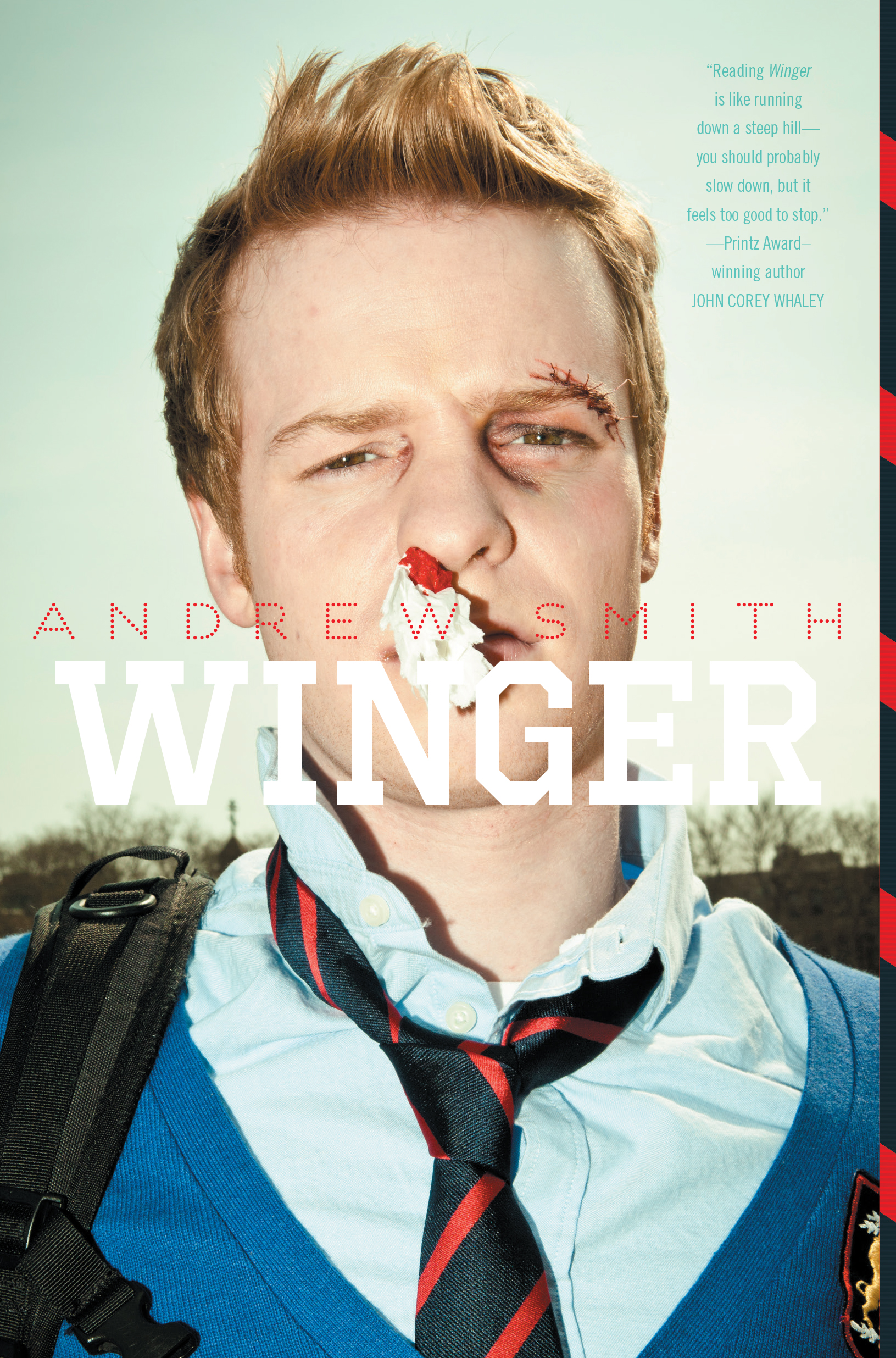



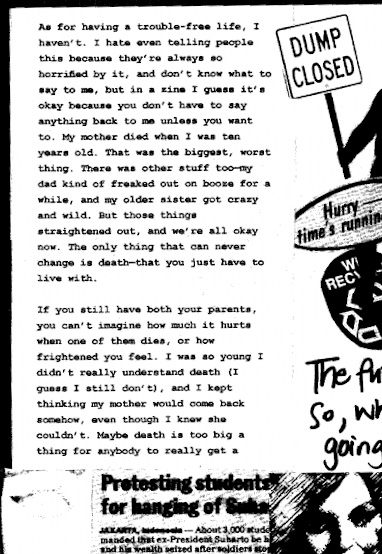

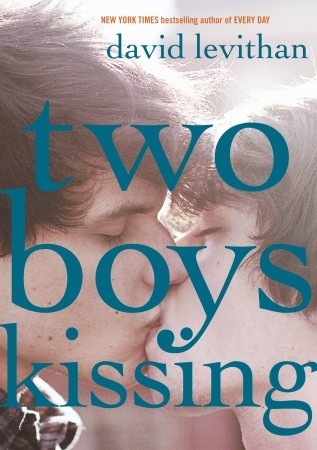


 Angel Daniel Matos