On Closets and Straight Gazes – Bill Konigsberg’s [Openly Straight]

Front cover of Bill Konigsberg's Openly Straight
Front cover of Bill Konigsberg’s Openly Straight (2013)

I was thinking about how snakes shed their skin every year, and how awesome it would be if people did that too. In a lot of ways, that’s what I was trying to do.

As of tomorrow, I was going to have new skin, and that skin could look like anything, would feel different than anything I knew yet. And that made me feel a little bit like I was about to be born. Again.

But hopefully not Born Again.

-Bill Konigsberg’s Openly Straight (p. 4)

Bill Konigsberg’s delightful and heartwarming novel, Openly Straight, pushes readers to question the possibilities that “shedding one’s skin” offers, and the consequences that arise when reinvention threatens our sense of self. The novel is narrated by Seamus Rafael Goldberg (who usually goes by Rafe), a high school student from Colorado who transfers to Natick–an elite, all-boys school in the New England area. Although Rafe is openly gay, he decides to conceal his homosexuality while attending Natick to live a life free of labels, and to explore the possibilities of living a life unhindered by the so-called burdens of queerness.

Rafe, at first, claims that “The closet is when you say you’re not gay” (132). Problematically, he views the closet as a singular and individualistic space created by self-denial–and he fails to recognize that the act of being “out” relies on the obliteration of the many closets that appear and re-appear in our everyday lives. As pointed out by Eve Kosofsky Sedgwick in Epistemology of the Closet

every encounter with a new classfull of students, to say nothing of a new boss, social worker, loan officer, landlord, doctor, erects new closets whose fraught and characteristic laws of optics and physics exact from at least gay people new surveys, new calculations, new draughts and requisitions of secrecy or disclosure. Even an out gay person deals daily with interlocutors about whom she doesn’t know whether they know or not. (68)

Rafe’s initial failure stems from his inability to understand that stepping out of the closet is not a one-step process, for it comprises an act of revelation and disclosure each time a new closet is erected in one’s life. I was impressed with how Konigsberg manages to invoke Sedgwick’s ideas of closetedness, especially as they are experienced by contemporary youths. Given that the novel takes place in a time where homosexuality is becoming more and more acceptable by mainstream society, I was delighted that Openly Straight explores the nuances and effects of closetedness in our brave new world. As evidenced by the novel’s protagonist, closetedness can still haunt even those who are out, open, and accepted.

Rafe is born into a family that readily and openly embraces his gay identity. However, Rafe is unable to appreciate his privilege because he deems that his homosexuality eclipses the other identities that he can embody–to the point where all he is able to see when looking in the mirror is the gay subject he is expected to perform, rather than the self:

Where had Rafe gone? Where was I? The image I saw was so two-dimensional that I couldn’t recognize myself in it. I was invisible in the mirror as I was in the headline the Boulder Daily Camera had run a month earlier: Gay High School Student Speaks Out. (3)

Rafe realizes that decision to hide his homosexuality and to pass as straight do come with certain perks. He is quickly accepted by the jocks at his new school, he is able to shower with his soccer team without worrying about the repercussions of the “straight gaze,” and traits other than his queerness are recognized. His ability to keep his self-imposed secret, however, is thwarted as he grows closer to Ben, a fellow jock and philosophy enthusiast who studies at Natick. As Ben begins to show signs of fluid sexuality, and as the two boys grow closer, Rafe reflects on how the perks of his reinvention come with the cost of being able to love truly and openly.

My favorite aspect of the novel is the complex relationship between Rafe and Ben. This relationship makes you feel all the warmth that you expect in young adult novels, yet this warmth is accompanied by realistic depictions of frustration and heartache. This is unsurprising, since Rafe and Ben’s relationship is based on experimentation and sexual confusion, even though one of the two characters definitely isn’t confused. This complex relationship ultimately leads Ben and Rafe to reflect on the nature of love–how it is possible to love people in different ways, and how it is possible for different types of love to overlap. This reflection leads to my favorite passage in the novel, in which Ben contemplates his non-normative affinities with Rafe:

I guess I’d like to think of what we have as agapeA higher love. Something that transcends. Something not about sex or brotherhood but about two people truly connecting. (225)

One another note, Openly Straight, in its essence, is about gazes, and how they control how we perceive ourselves and how others perceive us. Rafe’s decision to go back into the closet is driven by the fact he is tired of being viewed as a queer object by his friends, family, and peers. Rafe’s views are not entirely unfounded–he is constantly asked by friends and teachers to give his input as a queer subject. His attitudes, beliefs, and actions are constantly being traced back to his homosexuality by other characters. Rafe, understandably, feels the weight of queerness on his shoulders–and this weight is unshakable.

Rafe, nevertheless, complains about the gaze that others fixate on him, without coming to grips with the ways he gazes at others. In one of the later chapters of the novel, Rafe finds himself scrutinizing one of his queer peers at a Gay/Straight Alliance meeting–remarking on everything from his peer’s clothes to his haircut. As Rafe’s eyes remain fixated on his peer, he remarks how this other boy could pass for a woman if he wanted to. When Rafe’s peer notices that he is staring, Rafe becomes self-conscious about his gazing. It is at this moment that Rafe realizes that he is guilty of performing the very act of “straight gazing” that drove him back into the closet in the first place:

I was staring at this effeminate kid, and judging my own masculinity, or lack thereof. And was I so different from everyone else? Who was to say that Mr. Meyers in Boulder was thinking about when he looked at me? How come I was assuming that his staring at me had anything to do with me? (306)

Gazing, according to Rafe, is not a fixation based on rejection, pity, or disgust, but rather, it is a discursive relationship between the self and an other. Thus, the gazer reflects on his or her own selfhood as contrasted to another person–which leads Rafe to deduce that he could “spend a little less time worrying about what people thought about [him], since they probably weren’t thinking about him at all” (307). In other words, Rafe realizes that the fault and blame lies in the eyes of the gazer and not on the person being gazed.

I love this novel. I have been reading queer YA fiction for years, and I must say that Openly Straight astounds me on many levels. It is a testament to how much queer YA literature has evolved over time, and it makes me feel very optimistic about the present and future of the genre. I foresee that young readers will be particularly drawn to the humor and cleverness of this work. I also admire the fact that this novel offers readers the opportunity to explore a compelling, funny, and heartfelt narrative that doesn’t shy away from the complexities of contemporary queerness.

Works Cited

Konigsberg, Bill. Openly Straight. New York: Arthur A. Levine Books, 2013. Print.

Sedgwick, Eve Kosofsky. Epistemology of the Closet. Berkeley: University of California Press, 1990. Print.

You can purchase a copy of Konigsberg’s novel by clicking here.

Queer Time in Edmund White’s [A Boy’s Own Story]

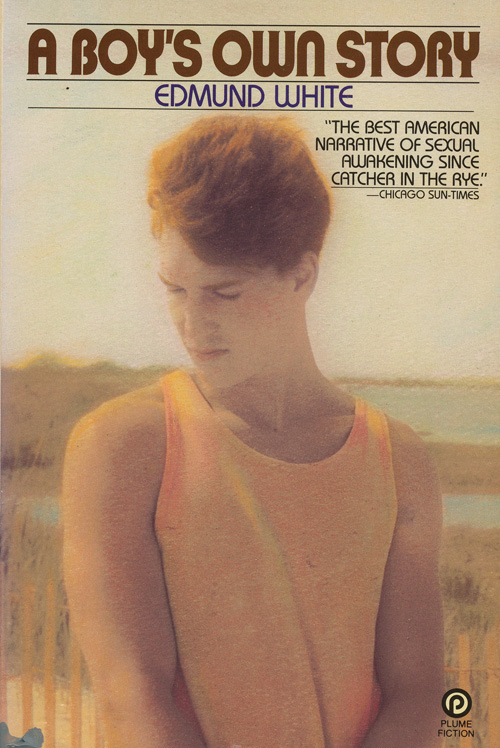
Front cover of Edmund White's A Boy's Own Story (1982)
Front cover of Edmund White’s A Boy’s Own Story (1982)

Edmund White’s A Boy’s Own Story is a coming-of-age novel centered on the sexual awakening of a queer teenage boy in the Midwest during the 1950s. The novel discusses topics such as the corruption of innocence, the pressures of masculinity in the lives of young boys, the emergence of childhood sexuality, and the exploration of humanity through the lens of homosexuality. The unnamed narrator of the novel quickly addresses the issues that he has in terms of his body and his sense of masculinity. He feels as if his “feminine” qualities–such as his voice, his mannerisms, and his overall attitudes– not only prevent him from bonding with other people, but that they also prevent him from obtaining any of the power that promised to those who embody the masculine myth. The narrator notices that everything from the way he sits to the way he acts marks his body as Other, and he even goes as far as to point out that he often fails small and meaningless quizzes used to assess his masculinity:

A popular quiz for masculinity in those days asked three questions, all of which I flunked: (1) Look at your nails (a girl extends her fingers, a boy cups his in his upturned palm); (2) Look up (a girl lifts her eyes, a boy throws back his whole head); (3) Light a match (a girl strikes away from her body, a boy toward–or perhaps the reverse, I can’t recall). (9)

The structure of this novel can seem slightly confusing, especially since it deviates from the traditional linear narrative that we have come to expect when reading coming-of-age novels. The first chapter, for instance, begins when the narrator is fifteen years-old. In this chapter, he painstakingly describes a relationship that he has with Kevin, the twelve year-old son of a guest that visits his summer home. In this chapter, the narrator describes how he paradoxically wants to be considered heterosexual while still being loved by a man. His relationship with Kevin slowly but surely starts to teach him how sex is not only a physical act, but how it is also a discursive act–leading him to realize that sex is also “a social rite that registered, even brought about shifts in the balance of power, but something that was discussed more than performed” (198). Because of this realization, he notices how performance and discourse shapes and forms his relationships with other men. For instance, he approaches Kevin as the “older” and more “dominant” person in the relationship because he is the more confident person of the two, and because he controls what happens during sexual intercourse:

I was chagrined by [his] clowning because I’d already imagined Kevin as a sort of husband. No matter that he was younger; his cockiness had turned him into the Older One (23).

The first chapter concludes by depicting how the narrator and Kevin part ways, and the second chapter goes back an entire year, allowing the narrator to discuss events that shaped who he is in his present day. Subsequent chapters go back in time even further, depicting events that the narrator encounters when he was twelve and seven years-old. The jumping back and forth between the past and the present not only disrupts the linearity of the coming-of-age narrative, but it also presents, as Elizabeth Freeman would put it, a manifestation of queer time. 

In Time Binds: Queer Temporalities, Queer Histories, Elizabeth Freeman describes queer time as a “hiccup in sequential time” that “has the capacity to connect a group of people beyond monogamous, enduring couplehood” (3). Furthermore, queer time allows queer subjects to envision alternative structures and forms of belonging, precisely because it deviates from the linearity and “productivity” of chrononormativity–in which human bodies arrange their time and bodies towards maximum productivity. In A Boy’s Own Story, queer time manifests through this combination of the past and the present, precisely because the narration deviates from the productive and generative elements that are closely associated with narratives of personal development. White, rather than depicting growth and development as sequential events, the narrator approaches them as fractured and disjointed processes. Rather than offering readers an equation, in which event 1, event 2, and event 3 equal the narrator, White disrupts temporality by beginning with event 3, going back to event 1, and covering the decimal points (small or micro events) that occur between these numbers. I think that this novel embraces queerness through it’s denial of both chronos (sequential time) and kairos (significant time), in favor of small non-sequential and non-significant time. This is particularly clear in the fourth chapter of the novel, in which the narrator breaks the fourth wall and addresses the reader:

in writing one draws in the rest, the forgotten parts. One even composes one’s improvisations into a quite new face never glimpsed before, the likeness of an invention. Busoni once said he prizes the most those empty passages composers make up to get from one “good part” to another. He said such womanlike but minor transitions reveal more about a composer–the actual vernacular of his imagination–than the deliberately bravura moments. I say all this by way of hoping that the lies I’ve made up to get from one poor truth to another may mean something–may even mean something most particular to you, my eccentric, patient, scrupulous reader, willing to make so much of so little, more patient and more respectful of life, or a life, than the author you’re allowing for a moment to exist again. (84)

I believe that this passage is quite significant, because it highlights the role that queer time plays in the novel’s political agenda. By disrupting linearity and by painstakingly focusing on minor events, the reader must develop patience and spend more time concentrating on the narrator’s words rather than on major events. The narrator affirms that by reading his words, the reader becomes not only more respectful of the narrator’s life, but the reader also brings the narrator back into existence. Therefore, through the act of reading, one gives the narrator a sense of legitimacy that was denied to him during his childhood. This interpretation gains even more validity when taking into account that most of the novel is focused on the narrator’s struggle to survive in his society, and even more so, his struggle to be approached and categorized as a legitimate human being. The narrator, for instance, acknowledged that he has little time to focus on “theory” or “philosophy” because he is too busy focusing on pragmatic aspects of his life such as survival. This notion is evidenced when the narrator compares himself to his jockish friend, Tom, who spends most of his time daydreaming and philosophizing:

Ironic, then, that [Tom] was the one who did all the thinking, who had the taste for philosophy–ironic but predictable, since his sovereignty gave him the ease to wonder about what it all meant, whereas I had to concentrate on means, not meaning. The meaning seemed quite clear: to survive and then to become popular. (113)

Although popularity may at first be approached as a self-centered and selfish goal, it is important to keep in mind that the narrator believes that popularity will give him the recognition and the legitimacy that he has been denied in his life, not only because he is queer, but also because he is unable to situate himself within the frame of traditional masculinity that his father upholds. Popularity would give the narrator the means to become a legitimate person rather than an unreal subject:

Being popular was equivalent to becoming a character, perhaps even a person, since if to be is to be perceived, then to be perceived by many eyes and with envy, interest, respect, or affection is to exist more densely, more articulately, ever last detail minutely observed and thereby richly rendered. (127)

All in all, A Boy’s Own Story is a rich and provocative novel that definitely raises interesting insights in terms of the role that temporality plays within the issues of livability that haunt all queer lives. The narrative is at times convoluted and difficult to follow, but getting lost is definitely an essential component towards grasping the novel’s central themes and agenda.

You can purchase a copy of White’s novel by clicking here.


Works Cited

Freeman, Elizabeth. Time Binds: Queer Temporalities, Queer Histories. Durham: Duke University Press, 2010. Print.

White, Edmund. A Boy’s Own Story. New York: Plume, 1982. Print.


Fact Versus Fiction: Alan Hollinghurst’s [The Line of Beauty]

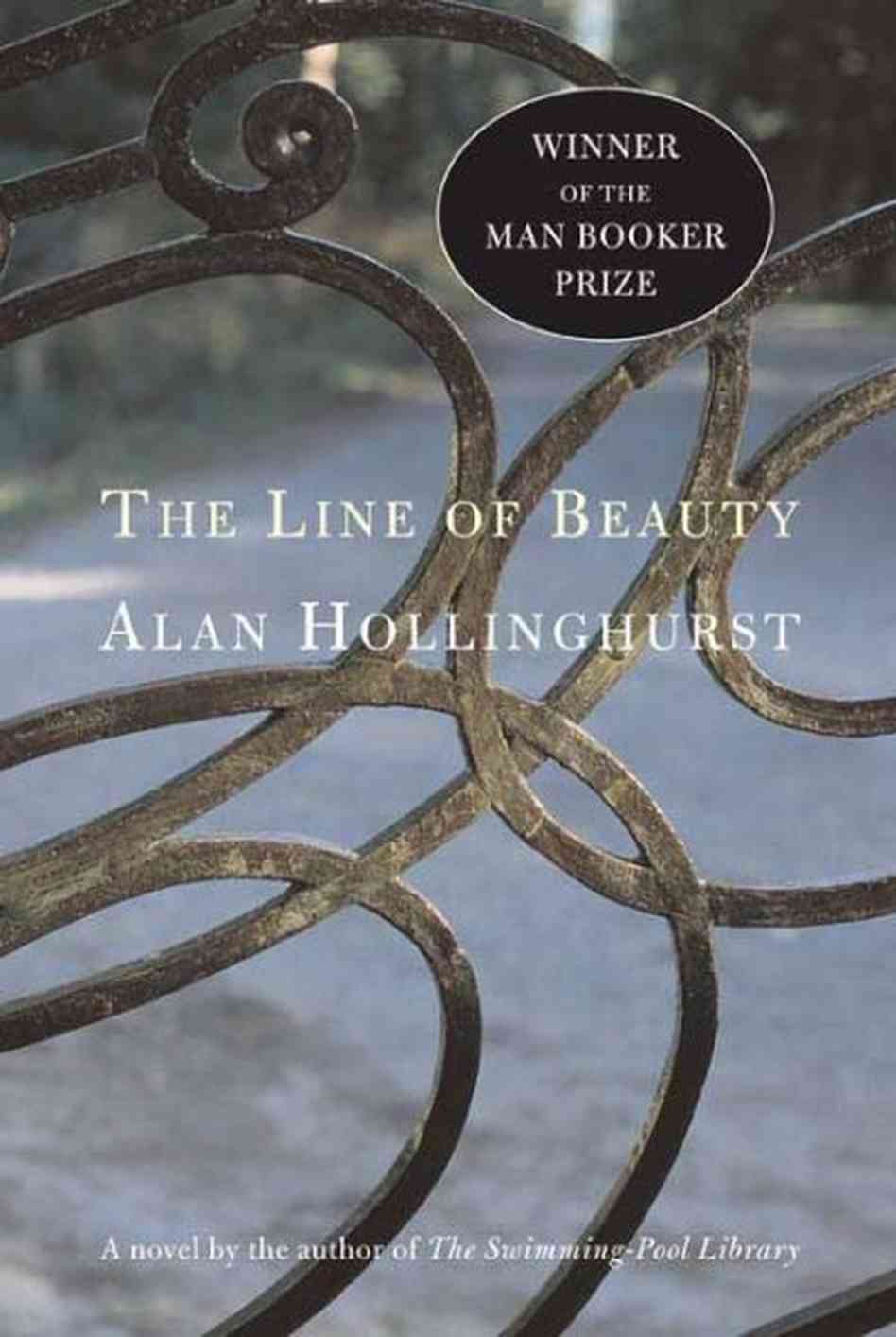
Front cover of Alan Hollinghurst's The Line of Beauty (2004)
Front cover of Alan Hollinghurst’s The Line of Beauty (2004)

I find it so easy to get lost in the elegance and artistry of Alan Hollinghurst’s The Line of Beauty. I originally planned to read this book in a day or two, but it took me a while longer simply because I was so enthralled and moved by the novel’s baroque descriptions and its aesthetic focus on issues pertaining to gayness and queerness during the 1980s. Blurring the lines between gay historical fiction, the Bildungsroman, and the novel of mannersThe Line of Beauty explores the lines that divide British upper-class and middle-class society, and the relationship between homosexual identity and class during the conservative boom in the United Kingdom under the rule of  Margaret Thatcher. Even more so, Hollinghurst’s novel offers readers an opportunity to examine the heartbreaking effects of AIDS during the rise of the disease.

The novel centers on the life and experiences of Nick Guest in his early twenties, as he graduates from Oxford University and begins a postgraduate degree in English at another university–where he specializes on the issue of style in the works of Henry James. Nick becomes close friends with Toby and Catherine, who are the children of Gerald Fedden, a wealthy Member of the British Parliament. Although Toby and Nick are best friends, Nick becomes very close and intimate with Catherine, a manic-depressive. Because of Nick’s ability to understand and help Catherine, Gerald invites Nick to stay in his mansion so that he can keep a watchful eye over his daughter. Nick stays at the Fedden residence for four years; here, he not only learns about the radical differences that exist between the lavish lifestyle of the Feddens and his own middle-class upbringing, but he also begins to explore his gay identity by dating  an older and much more experienced black council worker named Leo. Although Nick is out to the Fedden family, the issue of homosexuality instills a sense of discomfort in Gerald and his wife, Rachel. The family’s attitude towards homosexuality is made apparent early in the novel, when the family discusses the case of Hector Maltby, a junior minister of the Foreign Office who was caught having sex with a rent boy in his Jaguar:

The story had been all over the papers last week, and it was silly of Nick to feel as self-conscious as he suddenly did, blushing as if he’d been caught in a Jaguar himself. It was often like this when the homosexual subject came up, and even in the Fedden’s tolerant kitchen he stiffened in apprehension about what might carelessly be said–some indirect insult to swallow, a joke to be weakly smiled at. (22)

The residents of the Fedden estate are characterized not only by their social hypocrisy, but also by their silences: by refusing to talk of certain issues, they strive to act as if said issues are minor, non-consequential, and non-existent. As a matter of fact, Nick is characterized by his penchant for concealing or hiding information to assure that certain perceptions or attitudes are upheld in the Fedden residence. For instance, at the beginning of the novel, Nick discovers that Catherine, who has already attempted to harm herself, has been storing sharp tools within her bedroom. Rather than discussing this detail with Catherine’s parents, he decides to keep this information concealed to avoid upsetting Gerald and Rachel when they return from their trip. Nick not only conceals truths that he believes will upset the Fedden family, but he also has issues when it comes to separating fact from fiction–which leads to the manifestation of the vicious cycles that are so characteristic of postmodern texts:

In the course of their long conversations about men he had let one or two of his fantasies assume the status of fact, had lied a little, and had left some of Catherine’s assumptions about him unchallenged. His confessed but entirely imaginary seductions took on–partly through the special effort required to invent them and repeat them consistently–the quality of real memories. (24)

Sometimes his memory of books he pretended to have read became almost as vivid as books he had read and half-forgotten, by some fertile process of auto-suggestion. (48)

As evidenced above, Nick not only strives to conceal truth to uphold his social image, but he also fabricates stories to uphold a socially appealing facade. He frets when it comes to revealing his lack of knowledge or his lack of sexual experience–to the point where his fabrications become entirely real to him, or even worse, to the point where he deliberately forgets or represses truths about himself. This is perhaps most apparent when the novel, which is comprised of three parts, transitions from part one to part two. Part one, which takes place in 1983, concludes with Nick and Leo sleeping together in the Fedden’s house. The second part of the book takes place three years later, and it begins with a description of Nick’s affair with Wani Ouradi, a multi-millionaire of Lebanese descent who is engaged to a woman. This temporal leap leaves a gap in the narrative of the story. As readers, we have no clue what happened between Leo and Nick during this three-year span–all we are sure of is that they are no longer together, and that Nick’s relationship with Wani is masochistic and unhealthy. Not only is Wani into promiscuous and unsafe sex with strangers, but he is also addicted to porn and cocaine, and he is also deeply closeted. Nick, however, remains by Wani’s side not because the relationship is practical, but rather, because Wani is beautiful. This connects to one of the novel’s main themes, in which appearances trump pragmatics and livability. This desire for beauty and for appearance ultimately affects Nick’s ability to face his own truths, as is seen in the instance in which he encounters Wani seducing a stranger:

He went across the room and put the car keys down on the side table, and when he looked back Ricky and Wani were snogging, nothing had been said, there were sighs of consent, a moment’s glitter of saliva before a shockingly tender second kiss. Nick gave a breathy laugh, and looked away, in the grip of a misery unfelt since childhood, and too fierce and shaming to be allowed to last. (173)

Later on in the novel, Nick finds out that Leo has died due to AIDS-related complications. As Leo’s sister tells Nick the news, he at first wants to lie to her by stating that Leo dumped him, but he recognizes that this lie would seem petty, especially when considering the fact that Leo is no longer alive. Although Nick convinces himself that Leo was seeing someone else, we realize that he develops this “memory” to conceal the fact that he broke up with Leo soon after finding out that he was sick– “to screen a glimpse he’d had of a much worse story, that Leo was ill” (350). It becomes clear at this point that the three-year gap in the novel represents Nick’s unwillingness to deal with or recall the truths behind his relationship with Leo. Leo’s illness, in Nick’s eyes, would corrupt his beauty and make him imperfect, which is why he pursues a relationship with the physically flawless and beautiful Wani. However, towards the conclusion of the novel, it is revealed that Wani is also dying of AIDS-related complications–thus forcing Nick to meet truth face-to-face, while simultaneously forcing him to confront the realities of his own life.

I find it interesting that Catherine, the manic-depressive sisterly figure of the novel, is represented as the only person capable of dealing with truth and looking beyond the lies fabricated by her peers. For instance, when one of her friends, Pat, dies of AIDS, her family desperately tries to conceal that he died of this illness to prevent themselves being associated with a so-called “gay-related” disease. Catherine, however, forces the family to face the truth about Pat’s death, even though this confrontation leads to public shame and embarrassment. She later tries to convince Nick that “People are lovely because we love them, not the other way round” (304), to make him realize how toxic his relationship with Wani truly is, and to prove to him that the value that we bestow to people and objects should be based on more than just aesthetics. Catherine ultimately induces both the downfall of Nick and of her father, by revealing truths to the press: she not only reveals the fact that her father is having an affair with another woman, but she also reveals how Nick and Wani’s affair is taking place within the Fedden household–thus collapsing the differences between the gay and the straight world upheld by the Fedden family. The novel isn’t explicit of whether Catherine’s thirst for truth is triggered by her depression, or whether her depression was caused by her desire for truth in a mendacious environment–but it is interesting to observe how a character with a non-normative state of mind is able to look beyond the social masks and constructs that haunt the lives of these characters.

I love this novel. It is dense, thematically rich, and it is full of gaps and plot holes. It is not an easy novel to read or follow, but it excels at portraying the triumphs and failures of characters who are enticed and enslaved by the pursuit of beauty, even at the cost of truth, pragmatism, and reality. I also appreciate how this novel uses pastiche in order to invoke historical conceptions of AIDS in a contemporary platform–especially since discussions of AIDS have unfortunately diminished since the normativization of the disease due to the advent of anti-viral medications.

What are your thoughts or impressions of this novel? Feel free to add to this conversation!

You can purchase a copy of Hollinghurst’s novel by clicking here.

Work Cited

Hollinghurst, Alan. The Line of Beauty. New York: Bloomsbury, 2004. Print (hardcover edition).